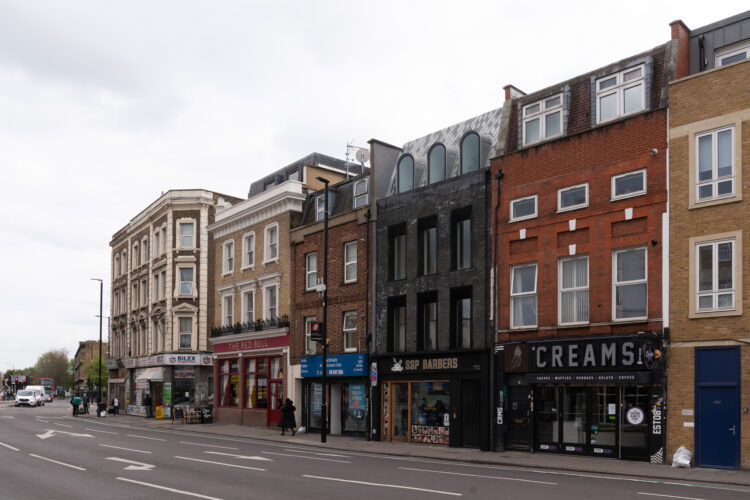
Four flawless apartments provide surprising sanctuary in Peckham Rye
June 5th, 2024

This article is more than a year old and may contain information that is out of date. Sorry about that.

In this edition of Listing of the Week, we’re spotlighting not one but four exquisitely crafted homes currently on the market with us. Designed by Cuozzo Fleming, this collection of newly built apartments makes a surprising sanctuary set back from one of London’s busiest high streets.
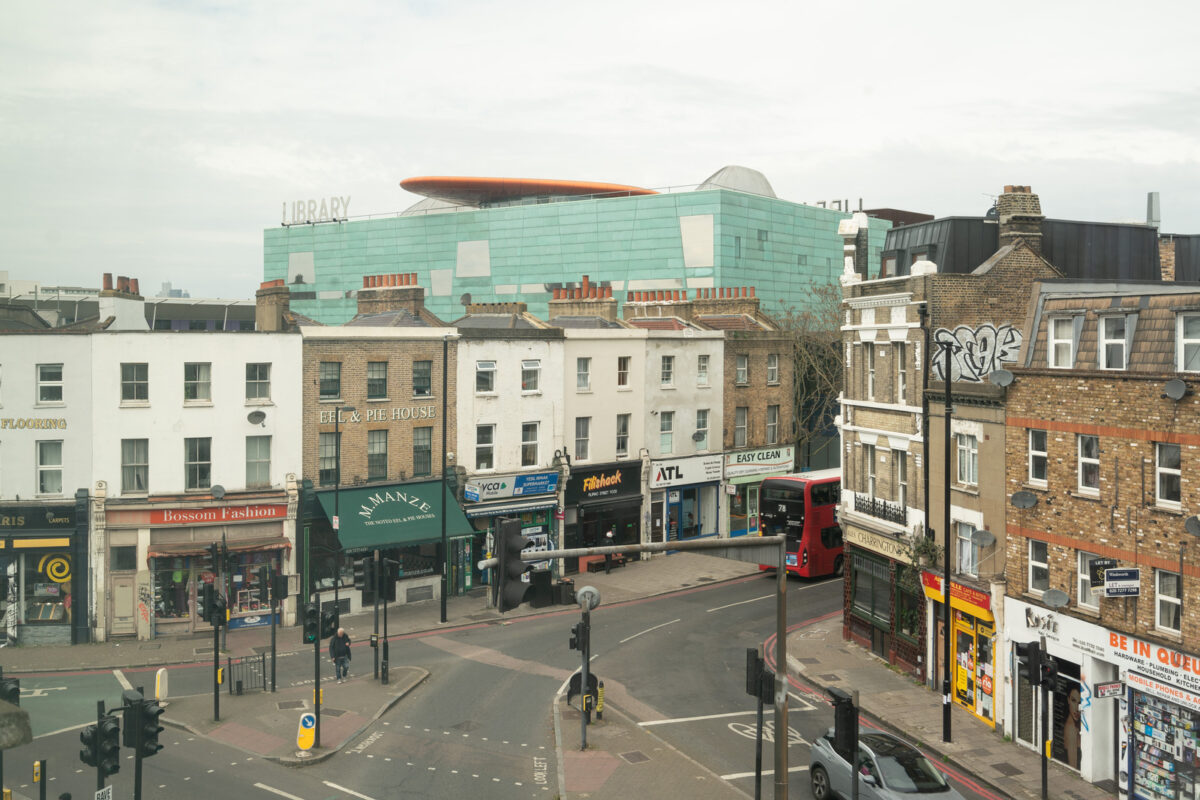
There’s a lot going on at Peckham Rye and – amid the bustle of the high street – it would be easy to miss the recessive, black brick façade rising above a barber shop. “It’s an intimate, but slightly ominous entrance,” says architect and director, Alessio Cuozzo: “We settled on a dark brick for the front and rear which would extend through the communal entrance … This is intended to emphasise the feeling of travelling under the building itself and sets you up your emergence into the lightwell.” If the entrance is “ominous”, the passageway to the central lightwell is utterly transportive …
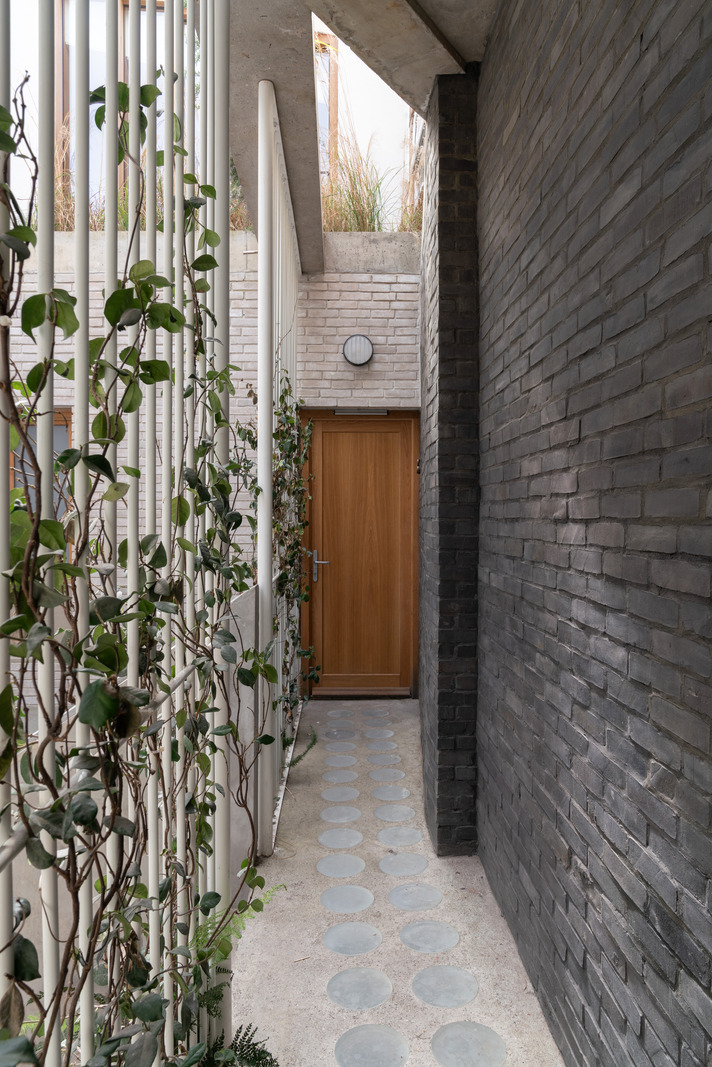
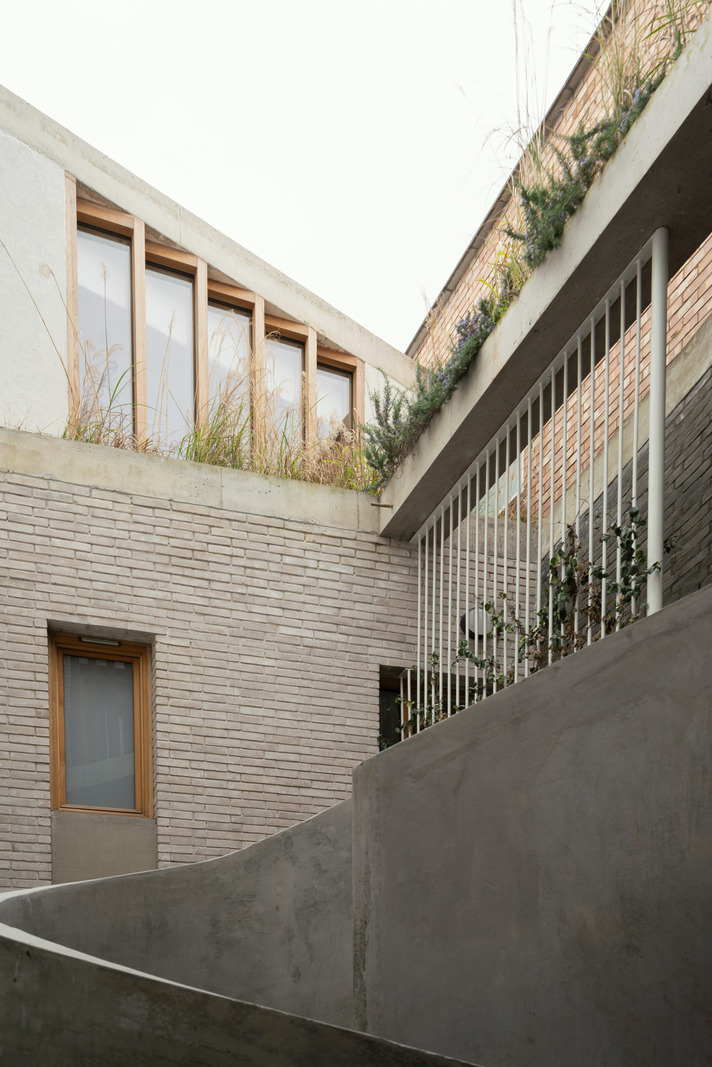
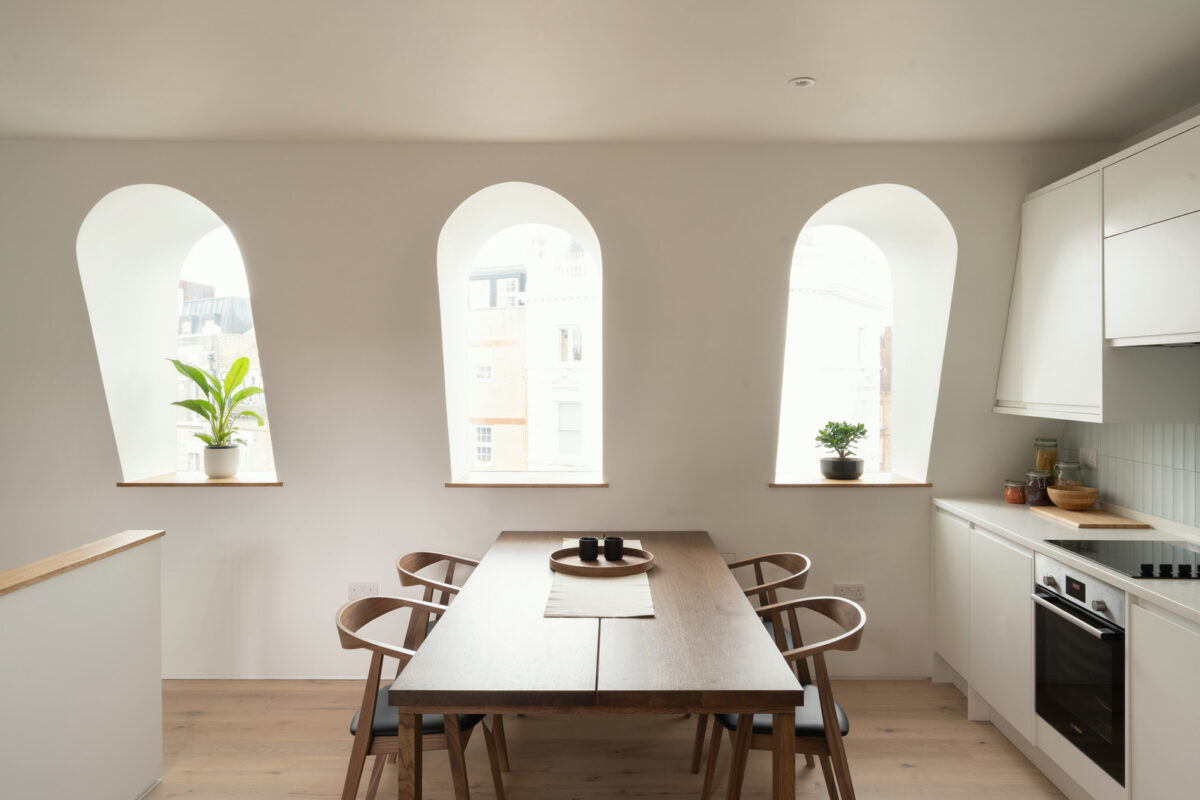
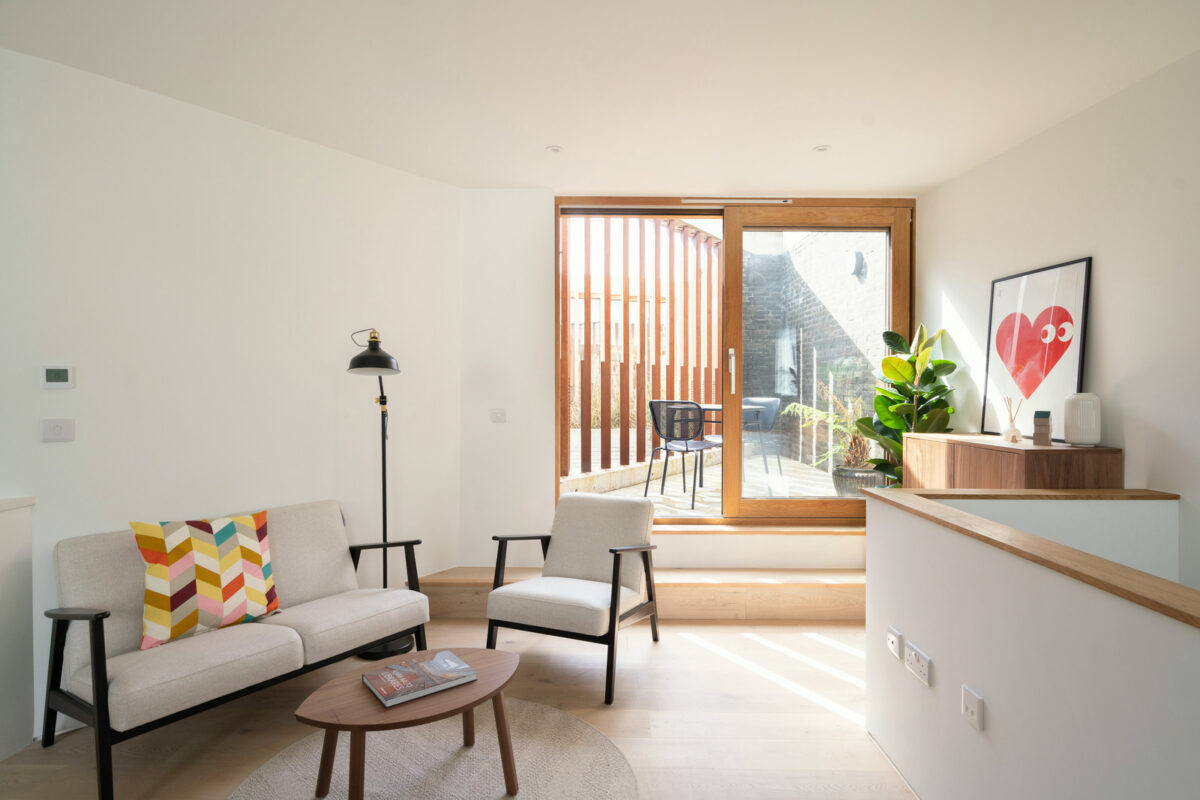
You emerge into a light-filled enclosure, overhung with trailing rosemary and creeping vines. A central staircase makes a sculptural ascent towards the sky. In contrast to the dark façade, the interior uses a lighter material palette with white brick and metalwork, natural oak fittings and pale exposed concrete. Vertical timber panels screen private terraces, while concrete walkways bisect privacy for new-age communality in the central atrium.
Already, rain exposure has changed the appearance of the external concrete copings and Corten screens, benefitting the site’s unique feel. “The exposed concrete has been selected because it’s not perfect,” Alessio explains. “In fact, nothing is intended to look perfect because perfection can be visually quite cold and artificial. I find that many new developments lack the warmth that comes about through age and patina,” he adds.
Imagination was key to the success of this singular scheme. “The building was in a sorry condition and it’s likely all the timber in the roofs and floors was rotten due to years of water ingress that had never been addressed,” says Alessio. “The wallpaper was peeling, the carpets were loose. There was mould on most of the walls and the windows were held in place with duct tape in some rooms, as they were falling out their frames.”
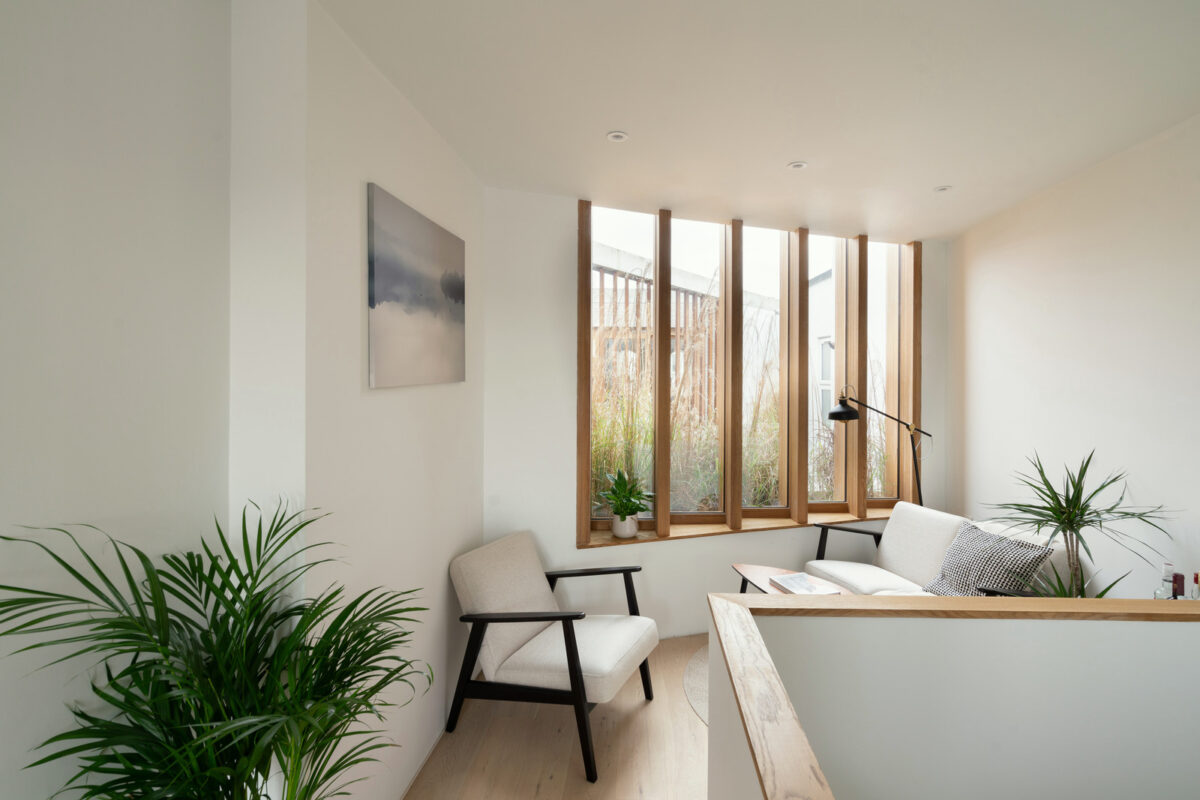
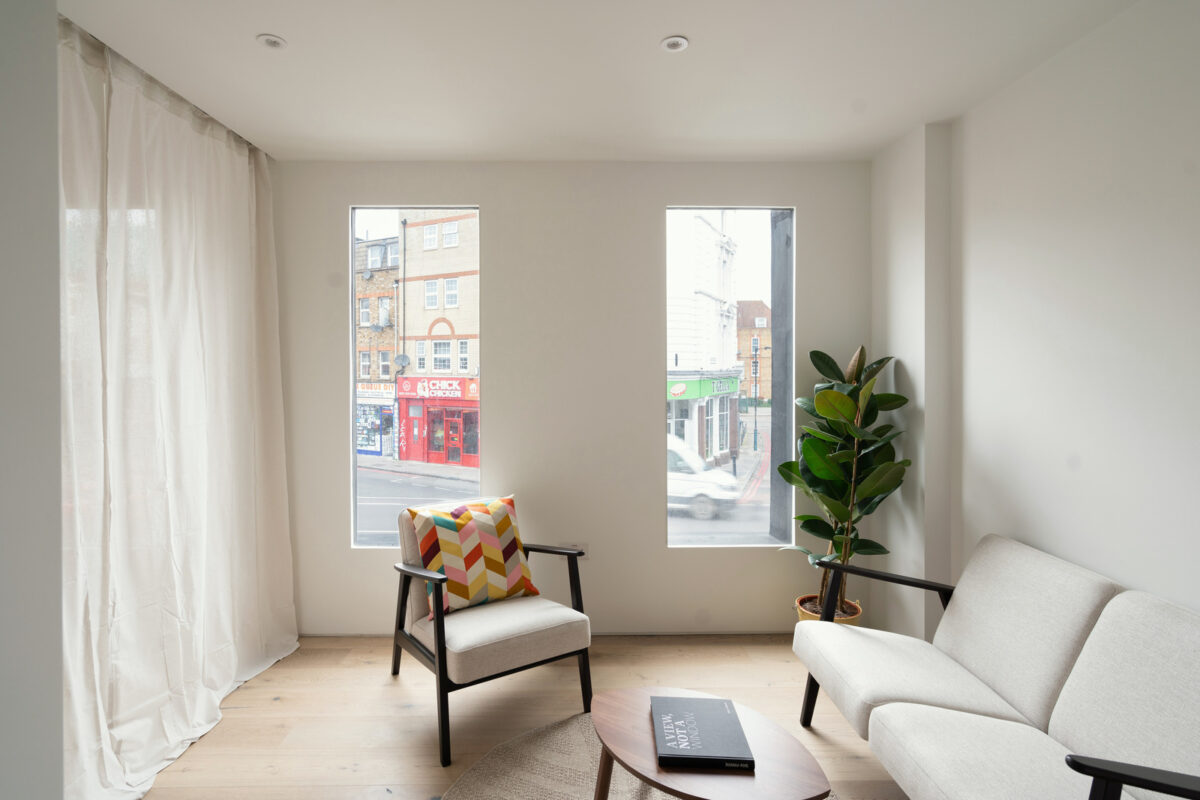
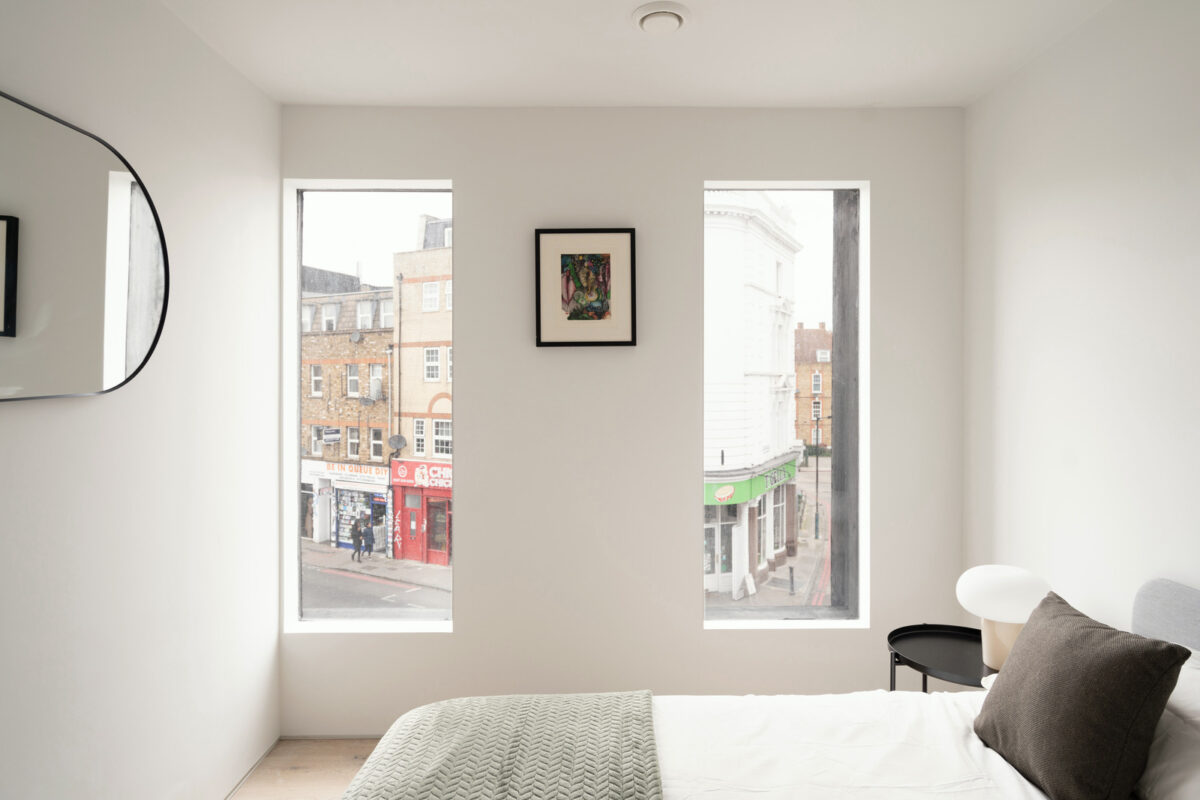
“Demolition and reconstruction was the best option,” says Alessio, who has persevered through the challenges, embraced irregularity and overcome the restrictions of the site. “The design of the lightwell is all about maximising the volume of the flats without blocking neighbouring windows,” he explains. “The small cantilevers, curves and steps all just avoid these windows. There is then a layer of design focused on maintaining privacy to these windows, which we achieve through planting and screening. Some of the windows have also been recessed within their frames to prevent sideways views.”
The overall effect is one of unexpected contrasts, positioning a riad-style complex on busy street in south-east London, moulding four contemporary apartments from the space above a barber shop and encouraging contemporary materials to soften with age. “The planting and weathering give the impression that nature is reclaiming this brand-new building, whilst also being this little unexpected oasis,” he says.