Noble Barn
Sold

Noble Barn
Nr. Henley-on-Thames, Berkshire
£3,250,000
Architect: McLaren Excell
or call +44 (0)20 3795 5920
Share


Sold
Noble Barn
Nr. Henley-on-Thames, Berkshire
£3,250,000
Architect: McLaren Excell
or call +44 (0)20 3795 5920
Share
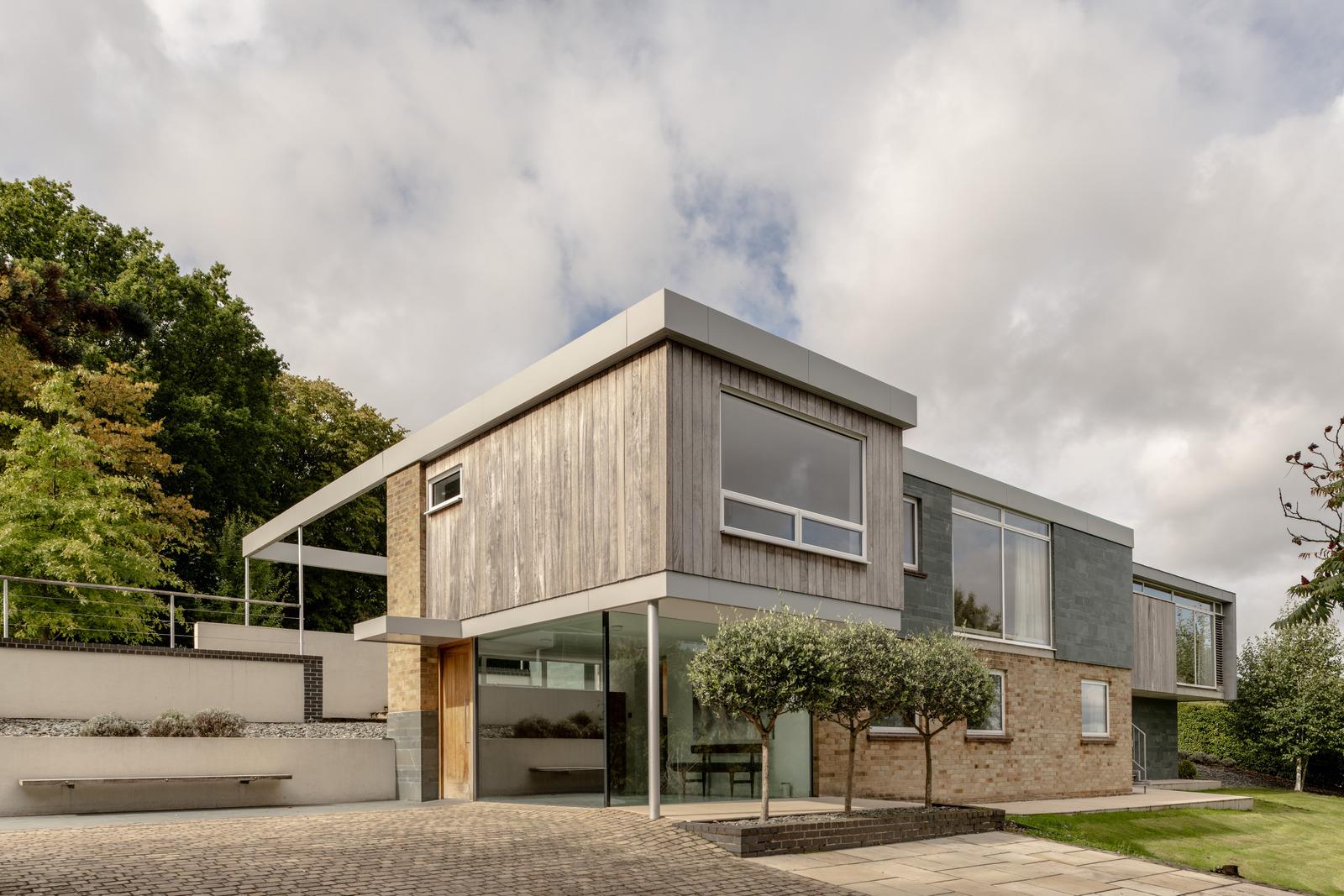
"The property is of rare and high architectural quality with an external polychromy of glazed-grey brick against a majority of red. The palette of materials used within is confident, restrained and considered, each carefully selected for resilience as much as aesthetic harmony."
Described, in part, by architects McLaren Excell as ‘the apotheosis of agricultural architecture’ this exceptional Grade-II listed barn belies its humble origins as a dairy cattle shelter. Built c.1900 as the principal barn of the grand Ferme Ornée, the original fabric of Noble Barn marries the artisanal qualities of the Arts and Crafts Movement with the prowess of Victorian engineering, across approximately 4,500 sq ft of internal space. The intricate brickwork and louvred windows of the original are retained and brought to the fore through an exemplary intervention by McLaren Excell. The house can be found off a private road in Remenham Hill, overlooking the grounds of the Park Place Estate which surrounds it, high in the Chiltern Hills yet less than a mile from Henley-on-Thames.
Noble Barn
£3,250,000


History


The Park Place estate, formerly a farm known as Perkes, Strowdes or Vyne's Place, was first established as a country seat by Lord Archibald Hamilton, who bought the land in 1719 and subsequently built a mansion there. From 1738 it belonged to Frederick, Prince of Wales, and from 1751 to General Henry Seymour Conway, who enlarged the estate and began laying out the present pleasure grounds. The estate was purchased in 1869 by the paint manufacturer John Noble, who re-landscaped the grounds and employed the architect Thomas Cundy III to rebuild the main house. He also redeveloped a number of the estate's agricultural buildings in a 'model farm' style. The dairy buildings at Park Place Farm were added to the existing complex at some point between 1875 and 1900.
Built during a period of agricultural decline, the barn was designed and constructed to an unusually high standard, reputedly due to competition with a neighbouring land owner, each patron aiming for the accolade of the superior construction. In 2018, the Times named the refurbished property as “probably the coolest barn in Britain”.
From conversations with the former farmer, the barn was used for cattle (with a hay loft over), then for general storage and later for Young Farmers’ dances. He believed it had originally been used for stabling horses. More recently it was used as the dormitory in the comedy remake of St Trinian’s, before undergoing its remarkable renaissance.
Interested?